The short answer
Crowd size does not predict your hotel rate. Crowd divided by the host market’s room count does. The Breeders’ Cup brings 43,000 a day to a Lexington market of about 9,062 rooms and breaks it; Las Vegas puts up 100,000 F1 fans a night across 150,000-plus rooms and rates fall. Here’s fall 2026 ranked by that arithmetic.
Two events, one piece of arithmetic
Readers keep asking us to forecast hotel sellouts one event at a time. Why is downtown Lexington gone for October 30? Will Austin have anything left by race week? The answers all come from the same division problem, so this time we ran it across the whole fall calendar at once.
The benchmark is the pair we’ve already documented. The 2026 Breeders’ Cup at Keeneland is capped at 43,000 attendees per day, per the Breeders’ Cup and Keeneland’s ticket announcement, and when local reporting counted Lexington’s hotel market ahead of the 2022 hosting it found about 9,062 rooms. That is 4.7 people per available room, per day, and the market breaks: participant blocks claim downtown’s full-service hotels months out, overflow lands 75 minutes away in Louisville, and rates step up rather than drift down.
Now the other end. The Las Vegas Grand Prix drew an announced 306,000 across the 2024 weekend, roughly 100,000 a night, into a market the LVCVA counts at more than 150,000 rooms. Two-thirds of a person per room. Race-week rates fell 66% in two years. Bigger crowd, opposite outcome, and the only variable that changed is the denominator.
One more pairing, and it’s almost too clean. Homestead-Miami Speedway’s grandstands hold about 43,000 after years of downsizing, per Forbes’ reporting on the facility. The same crowd that snaps Lexington in half rattles around greater Miami without leaving a mark, because Miami-Dade counted 64,476 hotel rooms in the GMCVB’s inventory report. Identical crowd. Different denominator. Completely different trip math.
So we built the table. This is not the surge-pricing story, which is about how every layer of game day reprices, and it’s not the revenue-management story, which is about who sets the rate and how. This is the capacity map underneath both: which fall weekends have the raw arithmetic to compress a market, and which only look like they do.
The fall 2026 board
Every attendance figure and room count below was verified against a public source in early September 2026. Where an event stopped announcing attendance (F1 released no official counts for the 2025 US or Vegas races), we use the last announced number and say so. One honesty note on F1’s weekend totals: they sum all three days, so a fan who attends Friday through Sunday is counted three times. Daily average is the fair divisor.
| Weekend | Event | Daily crowd (source) | Market rooms (source) | People per room |
|---|---|---|---|---|
| Oct 17 | Penn State at Michigan, Ann Arbor | 107,601 capacity (official) | 5,000+ (Destination Ann Arbor) | ~21 |
| Oct 30–31 | Breeders’ Cup, Lexington | 43,000 cap (Breeders’ Cup/Keeneland) | ~9,062 (2022 local count) | 4.7 |
| Oct 23–25 | US Grand Prix, Austin | ~143,000 avg from 430,000 weekend, 2024 (Statista) | 48,885+ (Visit Austin) | ~3 |
| Oct 31 | Florida-Georgia, Atlanta | 71,000 capacity (MBS, expandable to 75,000) | 90,000+ metro (Discover Atlanta) | 0.8 |
| Nov 6–8 | NASCAR Championship Weekend, Homestead | ~43,000 capacity (Forbes) | 64,476 Miami-Dade (GMCVB) | 0.7 |
| Nov 19–21 | Las Vegas Grand Prix | ~102,000 avg from 306,000 weekend, 2024 (F1) | 150,000+ (LVCVA) | 0.7 |
Read the right-hand column and you’d book these six weekends in that order of panic. You’d be wrong twice, and the two misses teach you more than the four hits.
Where the ratio hits
Lexington, 4.7, breaks exactly as predicted. Reserved seating sold out in July. The racing industry books whole properties before fans shop. The overflow ladder runs through Georgetown to Louisville. Our squeeze piece has the property-level detail; the one date that matters is the October 1 block release, your single realistic re-shop window.
Austin, around 3, breaks too, just more slowly. A three-day international crowd, most of it flying in and staying multiple nights, against roughly 49,000 rooms. Downtown triples and effectively sells out every year, and 2025’s crowd was reported as a record even without an official count. The Austin guide calls it the biggest hotel weekend on the city’s calendar for a reason. Round Rock and San Marcos are the pressure valves, and by October they’re the only ones left.
Atlanta and Vegas, under 1, behave. Florida-Georgia drops 71,000 people, half of them Georgia fans within day-trip range of Athens, into a metro with more than 90,000 rooms. The walkable blocks by Centennial Olympic Park compress hard; everything on a MARTA line barely moves. Vegas you already know. Under one person per room, supply wins, and the smart money books refundable and waits for the dips.
The Atlanta caveat is three days older than this article: a citywide convention generates more room nights than a stadium crowd, because badge holders all need beds and most ticket holders don’t. The collision board covers that layer. Run both checks before trusting a low ratio, since October 31 in Atlanta also happens to be Halloween in a city that throws a large one.
Where the ratio lies
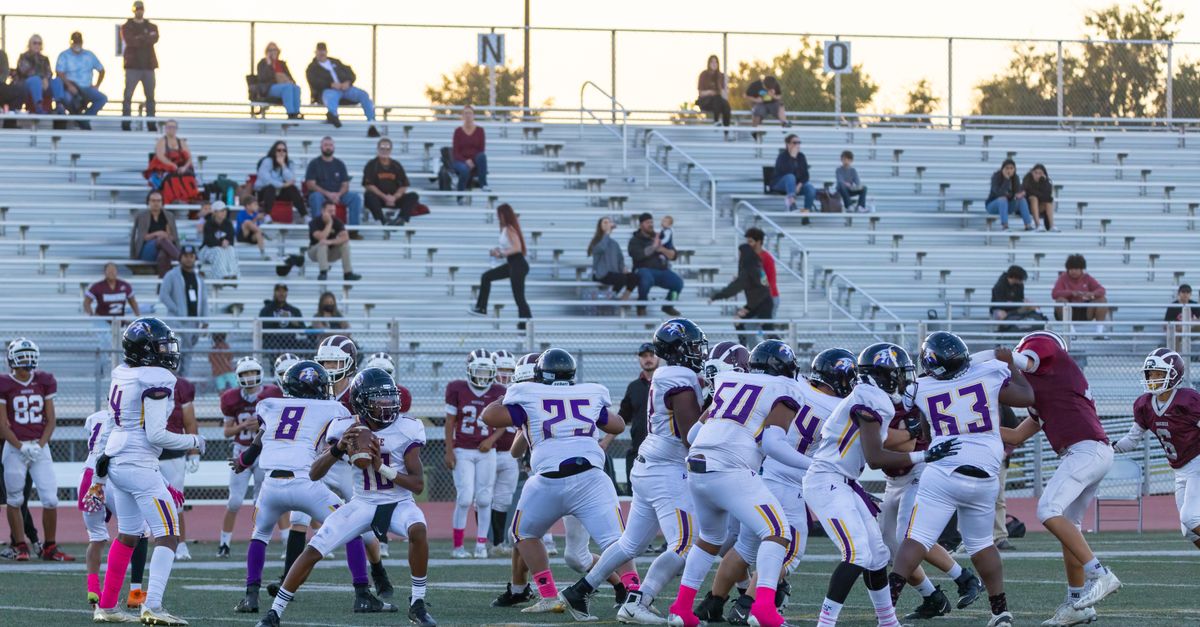
Ann Arbor tops this table at 21 people per room and does not produce Lexington-style chaos. Michigan Stadium’s official capacity is 107,601. Destination Ann Arbor counts 53 hotels and 5,000-odd rooms. On paper, a Michigan home Saturday should be the tightest hotel market in the country, five times worse than the Breeders’ Cup.
It’s tight. It is not Lexington. The reason is the second question the ratio never asks: how many of those 107,601 actually need a bed? A Big Ten crowd is overwhelmingly drive-in. Students walk. Alumni run it as a day trip from Detroit, Toledo, Chicago. The share of the gate that ends a hotel search with a booking is a fraction of the crowd. Lexington’s 43,000 is the opposite profile: owners, trainers, international connections, media, and fans who flew in for a two-day event, nearly all of whom need somewhere to sleep for multiple nights.
Homestead lies in the other direction. The strip of highway chains near the speedway is one of the thinnest lodging pockets ever to host a modern championship, and it sells out first, at event prices. If you measured Homestead alone, this would be the scariest line on the board. But the usable market is whatever supply sits inside the drive you’ll tolerate, and Miami-Dade’s 64,476 rooms start 35 minutes up the Turnpike. Same logic that saves Lexington bookers, except the ring is half as far: Kendall is Homestead’s Georgetown. The championship-weekend guide splits the two games explicitly, pay for proximity or arbitrage the metro.
So the honest version of the tool has three inputs, not two. Crowd, rooms, and the ring: the supply you can actually reach. Lexington’s ring is 75 to 90 minutes (Louisville, Cincinnati). Homestead’s is 35. Ann Arbor’s is 45 minutes to metro Detroit’s deep inventory, on top of a crowd that mostly drives home anyway. Austin’s ring is thin, which is exactly why it breaks despite a better headline ratio than Ann Arbor’s.
A word on rentals, because thin-ratio markets are where they matter most. The CVB room count is hotels only. In a college town or a horse town, whole-home rentals are supply that never shows up in the denominator, and on the worst weekends they’re where the surviving inventory lives. For a crew of four they usually win on price per head too. Cancellation terms are stricter than a refundable hotel rate, so sequence it: hold the refundable room, then commit to the house once your plans are solid.
Run it yourself in five minutes
The method, so you can price any weekend before you book it:
- Get the crowd. Announced attendance from the event’s operator, or the venue’s capacity if that’s all that exists. For multi-day totals, divide by the number of days; a weekend total triple-counts the three-day fan.
- Get the rooms. Search the host city’s convention and visitors bureau name plus “hotel rooms.” CVBs publish inventory because they sell it to meeting planners: Visit Austin says 48,885+, Discover Atlanta says 90,000+ metro, the LVCVA says 150,000+. Local business journalism fills the gaps, which is where Lexington’s 9,062 came from.
- Divide. Under 1, supply wins and patience pays. One to 2, book normally but early. Above 2, treat it as a compression event: expect minimum-stay fences and closed-out discounts, and book refundable the day your plans are real.
- Then ask the two correction questions. Does this crowd sleep here, or drive home? And what supply sits within the drive I’d tolerate? A day-trip crowd discounts the ratio; a fly-in crowd sharpens it; a big metro inside 40 minutes rewrites it.
Some markets flunk step two, which is its own signal. We wanted the Penn State White Out (October 10 against USC, with Beaver Stadium expected to approach 109,000 seats this season per the athletic department) and a Tuscaloosa-sized SEC Saturday in this table. Neither State College nor Tuscaloosa publishes a countable room inventory; the Tuscaloosa search ate half an hour and turned up hotel-count pages on booking sites, nothing a visitors bureau would sign. So both are out rather than estimated. When a market is too small to publish a room count, that usually tells you what the ratio would have said anyway. Book those towns the day the schedule drops, or plan the drive from the nearest real city.
Five of the six weekends on this board are still bookable at sane prices somewhere in their market as of this writing. Lexington is the exception, and it has been since July.