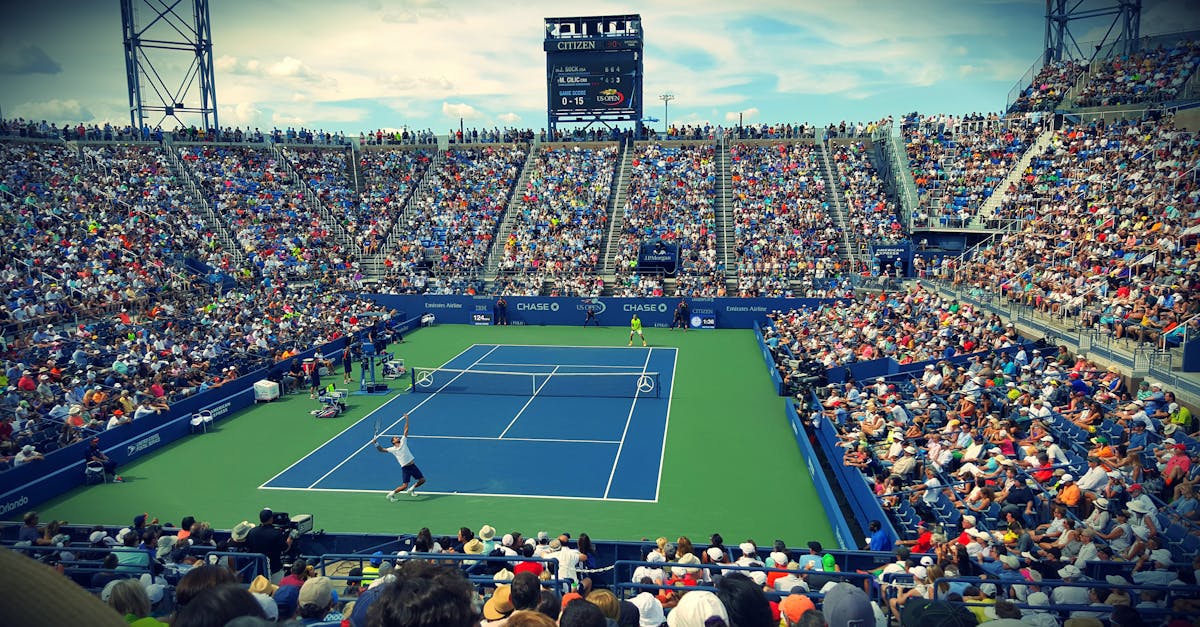
The 2026 Cincinnati Open finished August 23 at the Lindner Family Tennis Center in Mason, Ohio. Coco Gauff beat Jessica Pegula 6-2, 6-4 for her second title here; Arthur Fils beat Frances Tiafoe for his first Masters 1000. No 2027 dates are published yet. Packages went on sale January 29 this year.
Live rates and availability plotted around Lindner Family Tennis Center.
How the 2026 tournament ended
It’s over. Both finals went Sunday, August 23, and both were worth the drive.
Coco Gauff beat Jessica Pegula 6-2, 6-4 for her second Cincinnati title, after her first in 2023. It was the first all-American women’s final here in 56 years; the last one was Rosie Casals over Nancy Richey in 1970. Gauff went up 5-0 in the opening set. Pegula, who had beaten defending champion Iga Swiatek in the semis the day before, clawed back to 5-4 in the second and then ran out of court.
The men’s final was guaranteed a first-time Masters 1000 champion either way. Arthur Fils beat Frances Tiafoe 6-3, 1-6, 6-0. Getting there, Fils had to get past Thiago Tirante, the Argentine who’d put Novak Djokovic out in round two and then kept going. Tommy Paul removed top seed Alexander Zverev from a match point down. Aryna Sabalenka lost a tiebreak from 5-1 up and went out to Sara Bejlek after midnight. It was that kind of draw.
Doubles: Orlando Luz and Rafael Matos took the men’s, Marie Bouzkova and Linda Noskova the women’s.
The tournament is done for the year. Nothing on this page is bookable as a Cincinnati Open trip until the 2027 dates land. What’s below is the market knowledge, which doesn’t expire, plus what’s actually known about next year.
What’s known about 2027, and what isn’t
Not the dates. As of today the tournament hasn’t published a 2027 window, the ATP’s public calendar doesn’t name one, and there’s no on-sale page. Anyone quoting you a specific 2027 date right now is guessing, and a hotel listing built on a guessed date is worth nothing.
Here’s what is solid. The event is not moving. Beemok Capital’s $260 million rebuild of the campus, finished for the 2025 edition, came bundled with a commitment to keep the tournament in Mason for at least 25 years. The site more than doubled to over 40 acres, went from 21 competition courts to 31, and added a 2,000-seat sunken stadium and a 56,000-square-foot player center. Mason now runs a bigger tennis campus than Roland-Garros. That’s a lot of concrete to walk away from.
The slot is stable too. This has been the last big hard-court stop before the US Open for decades, and 2026 ran twelve days of it: qualifying August 11-12, main draw August 13-23, both finals on the closing Sunday. Treat “second half of August” as your planning assumption and nothing tighter than that.
The date worth putting in your calendar is a ticket date, not a tennis date. Series and multi-day packages for 2026 went on sale at 10 a.m. on Thursday, January 29, about six and a half months ahead, and the tournament said the previous year’s packages had gone in three days. Single sessions follow, with pre-sale registration in front of them. So the sequence for 2027, once dates exist: ticket first, room second. Rooms in this market stay findable for late bookers in a way finals-weekend tickets do not.
Where to stay
Here’s the thing nobody tells first-timers: the Cincinnati Open isn’t in Cincinnati. The Lindner Family Tennis Center sits in Mason, a comfortable outer suburb off I-71, directly next door to the Kings Island amusement park. There is no walkable hotel district at the gates and no train. Every lodging call is really a call about how far you’re willing to drive twice a day, and whether you want anything to do after the last ball.
Mason and the Kings Island corridor is the closest sleep. The hotel supply here exists mostly to serve the amusement park, a modest band of properties along the I-71 exits at Kings Island Drive and the Fields Ertel interchange, and it is nowhere near deep enough for a Masters 1000 crowd. Five to ten minutes to the tournament lots, easy in-and-out for day-session-plus-night-session doubleheaders. Best fit: the tennis-first traveler who wants maximum sessions and minimum windshield time, and families pairing the tournament with a Kings Island day. This corridor goes first every year. Shopping it inside a month means you’re on a cancellation watch rather than a browse: refundable rates booked back in the winter hit their cancellation cut-offs one to three days before arrival, and that’s when rooms quietly return to inventory. Check each morning for the specific night you need. Don’t build a trip around finding one.
West Chester and the Union Centre corridor is the overflow pro move. It sits along I-75 about 15-20 minutes west of the tennis center via the Tylersville Road and Union Centre Boulevard interchanges, and it’s classic modern chain-hotel land: newer builds, big parking lots, chain restaurants at every exit. Zero charm, total function, and meaningfully more supply than Mason. Best fit: anyone who tried Mason and found it gone, or groups who care more about room quality per dollar than shaving ten minutes off the drive.
Blue Ash and Sharonville split the difference. These are business-hotel suburbs along the I-71 corridor south of Mason, 15-20 minutes from the gates, built for weekday corporate travel. That’s the whole trick. Revenue managers at business hotels, the people who set the nightly rate, price against a comp set full of Monday-to-Thursday demand, so weekend rates here often stay soft while a tennis tournament runs up the road. There are real restaurants in downtown Blue Ash, too. Best fit: the value hunter who books late, and anyone attending mostly weekend sessions when the business hotels are quietest.
Downtown Cincinnati and Over-the-Rhine is the play if tennis is half the trip. You’re 25-30 minutes down I-71, and in exchange you get an actual city: Over-the-Rhine’s restaurant and brewery blocks, the riverfront, a Reds homestand if the schedule cooperates. The commute runs against rush-hour flow in both directions, north to Mason in the morning while commuters head downtown, south at night while they head home. Far less painful than the mileage suggests. Best fit: couples and groups where somebody isn’t watching twelve hours of tennis, and anyone staying several nights who’d go stir-crazy at a suburban interchange.
The rental option matters more late than early. Mason and West Chester are subdivision country, and the whole-house listings there exist to serve Kings Island families, so houses minutes from the grounds can still be sitting open on Vrbo or Airbnb after every nearby hotel has closed out its cheap rates. For a group of four chasing the closing weekend, one house beats two hotel rooms and gives you a kitchen before the early gates. Two caution flags: cleaning fees make a one-night rental a bad trade against a refundable hotel rate, and rental cancellation terms are stiffer, which cuts against the re-shop strategy entirely.
Where do the players stay
Scattered, and mostly across the same suburbs you’re shopping. We don’t name player hotels, for security, and neither does the tournament. But the shape of it is public: the tournament has long partnered with hotels in Mason, Deerfield Township, and West Chester for its traveling circus of players and support teams, and some players skip the suburbs entirely, base downtown, and drive I-71 like everyone else.
The tell about what kind of place Mason is: since the event moved here in 1979, every player has been handed a free rental car. “We were the first tournament to do that,” tournament CEO Elaine Bruening told WCPO. There’s no Manhattan-style scene where the field clusters in two famous hotels, because there’s nothing to walk to. Players drive to dinner like every other Mason resident. The rest of the perks list leans the same way: comped Kings Island admission, free golf at the Mason Golf Center, Reds tickets, Bengals preseason.
The stars often skip hotels altogether. Federer rented a house near the grounds for years so his family could come along, and told WCPO the area reminded him of the Swiss suburbs. The new player center, two stories and 56,000 square feet with its own restaurant, lounges and recovery rooms, was the rebuild’s answer to the same problem from the other direction.
Why this belongs in a hotel guide: the tours travel heavy. Players, coaches, physios, officials and broadcast crews absorb blocks of a hotel market that was thin to begin with, locked in well before fans start shopping. That’s part of why the Mason corridor closes out first every single year, and why the cancellation watch is usually the only way in late.
Getting there
You’re driving. Plan for it. There’s no rail line to Mason and no meaningful transit from downtown. This is a car event. The good news is that the tournament leans into it: every ticket includes free parking in the public lots (U and G in 2026), a shuttle runs from those lots to the gates, and full-series holders, premium holders and anyone who buys upgraded parking get the closer North, South, East and Diamond lots. By the standards of major-event parking, shockingly civilized. Show up 45-60 minutes before your session and you walk in without drama.
From downtown Cincinnati: I-71 north, roughly 25-30 minutes to the Kings Island exits in normal traffic. Evening sessions are the trap. You drive up as commuter traffic thins, then the return after a night session stacks with everything else leaving the venue.
The Kings Island wildcard. The amusement park sits directly next to the tennis center and shares the same interchange ecosystem, and it’s fully open through August. Park crowds leaving after the nightly close, typically around 10 p.m., collide with tennis traffic on the local roads. If your night match runs long, wait out the first wave on the grounds rather than idling on Kings Island Drive.
Rideshare and drop-off: Uber and Lyft are directed to a designated drop-off and pick-up zone near the East Entrance. Buses, shuttles and other public transportation use a separate space near the South Entrance. Rideshare from downtown works fine on the way up. The way back after a night session is where you meet surge pricing and a thin suburban driver pool at the same time. If you’re basing downtown without a car, pre-book the return ride or expect to pay for the privilege of standing in a parking lot refreshing an app.
From the airports: CVG is about 45 minutes southwest, across the river in Kentucky. You’ll cross two states to get to the tennis. Dayton is about 50 minutes north and often overlooked; Mason sits close to the midpoint, so shop both fares.
Session-day reality, whenever you come back
Sessions are separate tickets. Day and evening are ticketed separately, so a full-day marathon means buying twice. Package buyers hold the premium lots from January. A regular single session puts you in the free public lots with the shuttle, which works fine here.
The bag policy bites people. No backpacks, meaning nothing with multiple compartments and multiple shoulder straps, and nothing over 12 x 18 x 15 inches whether it’s clear or not. Single-strap totes inside that size are fine. Everything is searched, the venue provides no gate storage, and anything prohibited goes back to your car or in the trash. Your car is a shuttle ride away across a big lot, so “back to your car” is a real cost. Unopened clear plastic bottles and empty reusable ones come in free, up to a liter.
August in southwest Ohio is hot, and wetter than people expect. Mid-90s heat indexes are routine, the outer courts have minimal shade, and day sessions bake. Sunscreen, a hat and a refillable bottle are equipment. Storms are the other half of it: 2026 lost the entire August 12 qualifying day to rain and had round-of-16 play interrupted as well. You can carry an umbrella in, but it only opens in the stands during a delay. Evening sessions are the glamour ticket and the comfortable one.
The structural read
Suburban Cincinnati has plenty of rooms in aggregate. What it lacks is rooms at the venue, so this event plays out as a proximity auction rather than a citywide sellout. That’s the durable fact about this market, and it will be just as true in 2027 as it was last week. Decide honestly what a ten-minute drive versus a thirty-minute one is worth to you per night, book that corridor refundable the week the dates and tickets drop, and re-shop it as the tournament gets close.
We’ll put the 2027 window on this page the day it’s published.
Guide updated 2026-08-24