The short answer
MLB’s postseason gives you one or two days’ notice between rounds, and hotel rates in playoff cities jump the hour a home date is confirmed. The counter: book refundable rooms in August for the Division Series window (roughly the first two weeks of October) in your contender’s city, then roll or cancel round by round. Canceling is free. Waiting isn’t.
How October actually works, and why it burns travelers
Twelve teams make the postseason: three division winners and three wild cards per league. The bracket has four rounds, and the spacing between them is the trap.
- Wild Card round: best-of-three, all games at the higher seed’s park, slated to open Tuesday, September 29. Three games in three days.
- Division Series (LDS): best-of-five, starting roughly two days after the Wild Card round ends.
- League Championship Series (LCS): best-of-seven, on the heels of the LDS.
- World Series: best-of-seven, October 23–31 window.
(These are the league’s announced dates, not a projection: MLB has published the full 2026 postseason calendar, with the Division Series opening Saturday, October 3 and the LCS no earlier than Sunday, October 11. What isn’t set is which cities host which nights.)
Read that spacing again. A Wild Card series ends Thursday; the LDS opens Saturday. Your team wins a decisive Game 5 on a Sunday night and the LCS starts Tuesday, in a city nobody knew mattered until the final out. Every round, an entire fan base tries to book the same eight downtown hotels inside a 36-hour window. That’s not a market you want to enter late. One more wrinkle: the two best seeds in each league skip the Wild Card round entirely and sit until the LDS, which makes their home dates the most predictable in the bracket. Their cities are the smartest early stakes.
The 2026 map: cities worth staking out now
Standings as of August 28, 2026, with about a month left. These are stakes, not guarantees, and the whole strategy is built to survive being wrong.
The bye seeds (the two best division winners per league skip the Wild Card round, so their home dates are the most predictable in the bracket):
- Milwaukee Brewers (83-51): the best record in baseball, having passed the Dodgers during August. American Family Field is a tailgating park with a small downtown a few miles away, and Milwaukee is exactly the kind of compact-inventory market where playoff rates go vertical. If one city on this page deserves a stake tonight, it’s this one.
- Los Angeles Dodgers (80-54): led the majors most of the summer, second in the NL now, still holding the other NL bye. Dodger Stadium in October is close to an annual event at this point. LA hotel inventory is vast, but Chavez Ravine sits in a transit gap; our Dodger Stadium guide covers the neighborhoods that actually work.
- Tampa Bay Rays (79-54): the AL’s best record, leading the East, and back home. Tropicana Field reopened in April after a year of hurricane repairs, new roof and all. St. Petersburg’s hotel scene is boutique-sized; overflow lands across the bay in Tampa.
- Chicago White Sox (70-63): leading the AL Central, and the quiet arbitrage on this page. By record they’re fourth in the league, behind the Yankees and Red Sox, but division winners get seeds 1 through 3 regardless of record, so the Sox would take the second seed and a bye while better teams play a best-of-three. Rate Field’s South Side location makes downtown-plus-Red-Line the standard play, and Chicago in early October is not yet pricing like a playoff market.
Division leaders in tighter races:
- Atlanta Braves (79-55): five up in the NL East and one game out of a bye. Truist Park and the Battery form their own micro-market in Cobb County, a solid ride from downtown Atlanta. Battery-adjacent hotels are few and evaporate first.
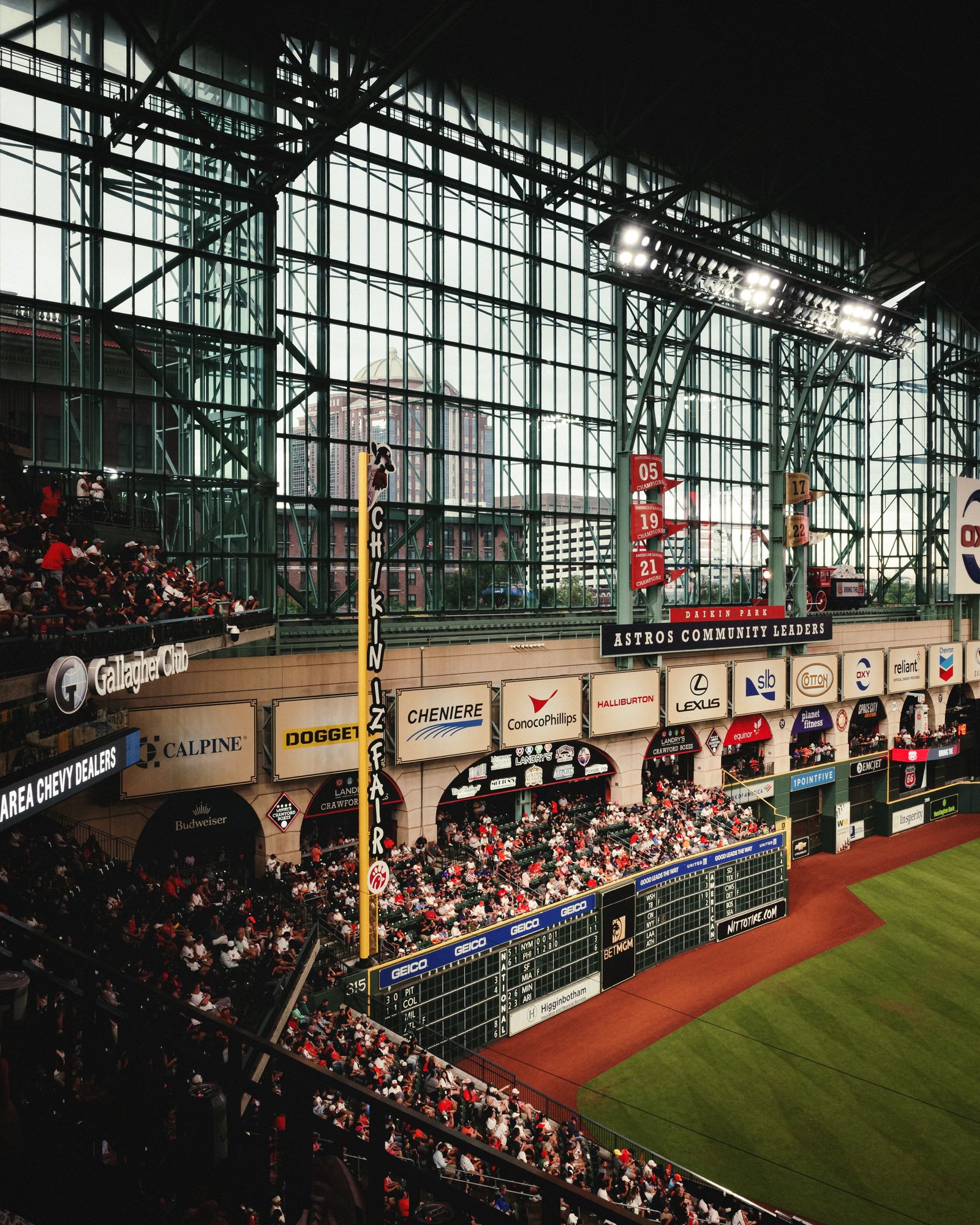
- Houston Astros (67-67): leading the AL West at exactly .500, with Texas (66-68) a game back and Seattle (64-70) three. Seattle led this division in July; it is anyone’s. Houston is the forgiving version of a playoff market: deep downtown inventory with Daikin Park inside it.
The wild-card scrum (book lighter here, but know the geography):
- AL: the Yankees (75-58) hold the top spot, with a better record than two division leaders and no bye to show for it. Yankee Stadium is the rare playoff venue where staying in Manhattan and taking the 4 train beats staying near the park. Boston (73-60) and Cleveland (68-66) hold the other two; Texas (66-68) is the first team out.
- NL: the Cubs (76-58) mean Wrigleyville, the most distinctive playoff hotel market in the sport. Small, loud, instantly sold out, with downtown Chicago as the pressure valve. Philadelphia (74-60) brings Citizens Bank Park and a Center-City-plus-Broad-Line-subway play. San Diego (72-62) is the newcomer since July, and Petco Park sits in the Gaslamp, where the hotels are the nightlife. Arizona (71-64) is a game and a half out; Miami, the surprise of the early summer, has fallen out at 68-66.
A month ago this list had Seattle leading the AL West, Miami holding a wild card and the Dodgers on top of baseball. All three have turned over. Some of these will turn over again before the end of September, which is why every room in this plan is refundable.
How October pricing behaves in baseball cities
Playoff hotel pricing follows a script. Learn the beats:
- The confirmation jump. The hour a home date becomes real (series clinched, schedule posted), rates near the park move. Not gradually. Repricing is automated now; the algorithms watch the standings too.
- The compression climb. From confirmation to first pitch, rates keep stepping up as inventory thins, with a final surge in the last 48 hours from fans who chased tickets first and hotels second. Wrong order.
- Small markets spike hardest. Milwaukee, St. Petersburg, Cleveland, Arlington: limited downtown inventory means a playoff series can functionally sell out the walkable zone. Big markets like LA, Chicago, and New York bend instead of breaking, but they start from $250+ baselines.
- October stacks. Conventions, fall-break tourism, and football weekends already occupy October calendars in Chicago, New York, Atlanta, and Seattle. A weekend LCS game on top of a citywide conference is how a $200 hotel becomes a $500 hotel.
- Weekday games are your friend. A Tuesday LDS Game 3 prices meaningfully softer than a Saturday Game 1 in the same market. If you can only make one game, chase the midweek one.
The refundable-stake strategy, round by round
Here’s the play, on a calendar:
| Round | Format | 2026 window | Your move |
|---|---|---|---|
| Wild Card | Best-of-3, all at higher seed | Sept 29 – Oct 1 | Late Sept: stake only if your team will host |
| Division Series | Best-of-5 | ~Oct 3–11 | Book this window in August. This is the stake. |
| LCS | Best-of-7 | Mid-October | Roll your stake the night the LDS ends |
| World Series | Best-of-7 | Oct 23–31 | Stake in August only for true top-seed contenders |
Right now, with days left in August: book refundable rooms covering the LDS window in your contender’s city. Two or three nights bracketing the likely home dates. Rates are still normal because the algorithms can’t reprice what isn’t confirmed, and nothing about October is confirmed yet. If your team looks like a bye seed — as of today that’s the Brewers and Dodgers in the NL, the Rays and White Sox in the AL — the LDS home dates are the most predictable in the whole bracket, which makes this stake nearly free money. Feeling ambitious? Add a World Series-window stake in the one or two cities you genuinely believe.
Late September: the field locks on the season’s final weekend. Hosting a Wild Card series? Add those nights. Eliminated? Cancel everything in five minutes from your couch.
Round by round in October: the night your team advances, book the next round’s city before you go to bed. You’re racing every other fan awake after the final out, and the ones who move within the hour win. The night your team is eliminated, cancel before the cutoff. Cold-blooded, both directions.
The two rules that make it work: refundable rates only, because the 10–15% premium over prepaid is your option price and it’s the cheapest thing in October. And calendar every cancellation cutoff (usually 24–72 hours before check-in) the day you book. A refundable room you forget to cancel is just an expensive room.
Do it this week
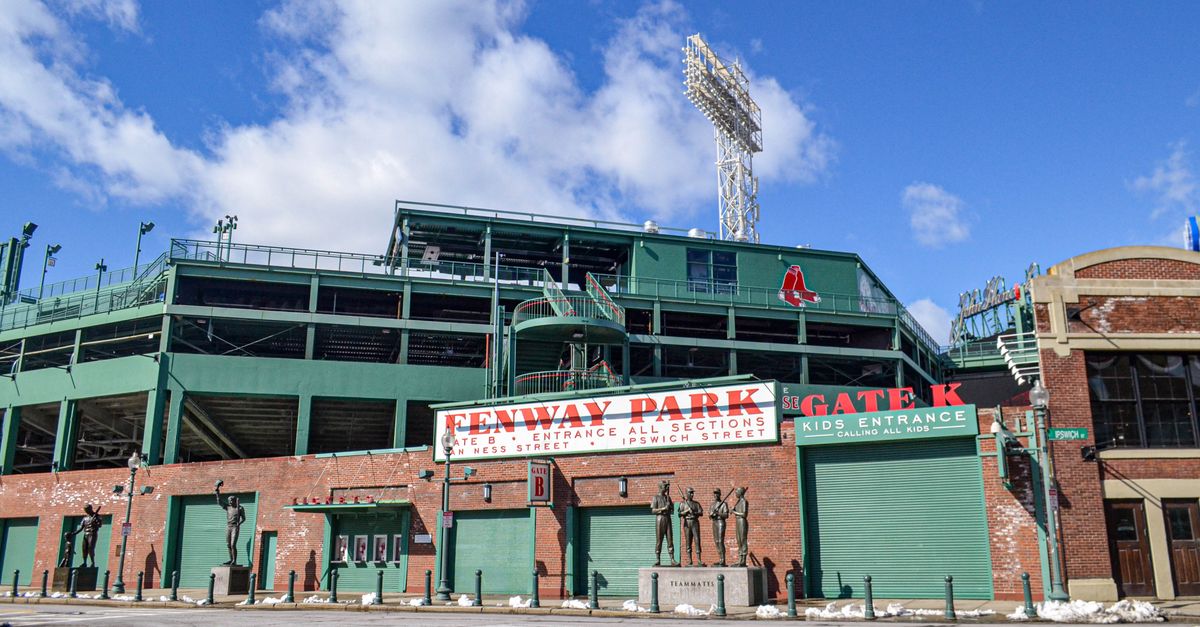
Pick your team. Pick the fallback city you’d travel to anyway. A Cubs fan should know where they’d stay for a series at American Family Field, because Brewers–Cubs in October is a live possibility and a 90-minute drive. Book the LDS window, refundable, tonight. Our venue guides for Dodger Stadium, American Family Field, Tropicana Field, Truist Park, Wrigley Field, Yankee Stadium and the rest call the right neighborhood in each market.
Half the cities on this page won’t matter in October. The rooms you cancel cost you nothing. The one you keep is the difference between watching a clincher from the upper deck and watching it from your living room because every hotel within five miles wanted $480 a night.